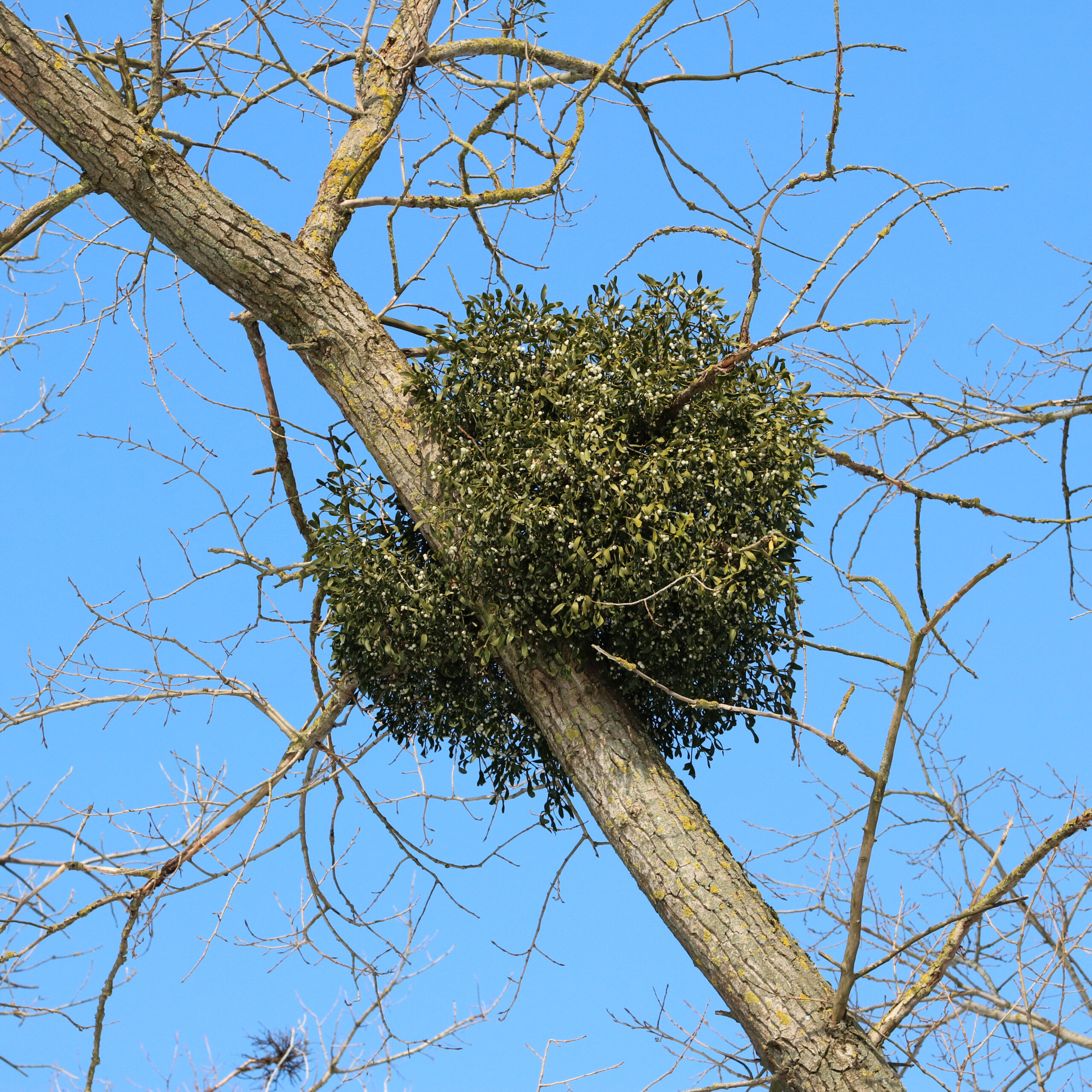
Think of mistletoe as a parasite that quietly steals from your tree. In Northern California it shows up most often on oaks, maples, and some conifers, and it usually starts small — then spreads.
Spot it by looking for:
-
Dense green clusters mid-branch or up in the canopy
-
Swollen or malformed branch tissue where it’s attached
-
Growth high in the tree that looks “stuck on” rather than part of the limb
Why you should care:
Mistletoe pulls water and nutrients from its host. That doesn’t just slow growth — it weakens branches, increases the chance of breakage during wind or storms, and leads to branch dieback over time. Left alone, a small patch can become a structural problem on a mature oak.
Practical steps (do these first):
-
Cut out infected limbs back to healthy wood when safe and practical.
-
Monitor high-value trees — check crowns annually, especially on older oaks.
-
Consider removal of heavily infected limbs or entire trees if the infestation threatens people or structures.
One more thing to keep in mind: mistletoe is easier to manage when caught early. If you’re unsure whether to prune or remove, a focused inspection from a certified arborist will tell you whether the tree can be saved or if it’s a liability.
Want a super-short version for your website (under 100 words) or a step-by-step homeowner checklist? I’ll write it next.