
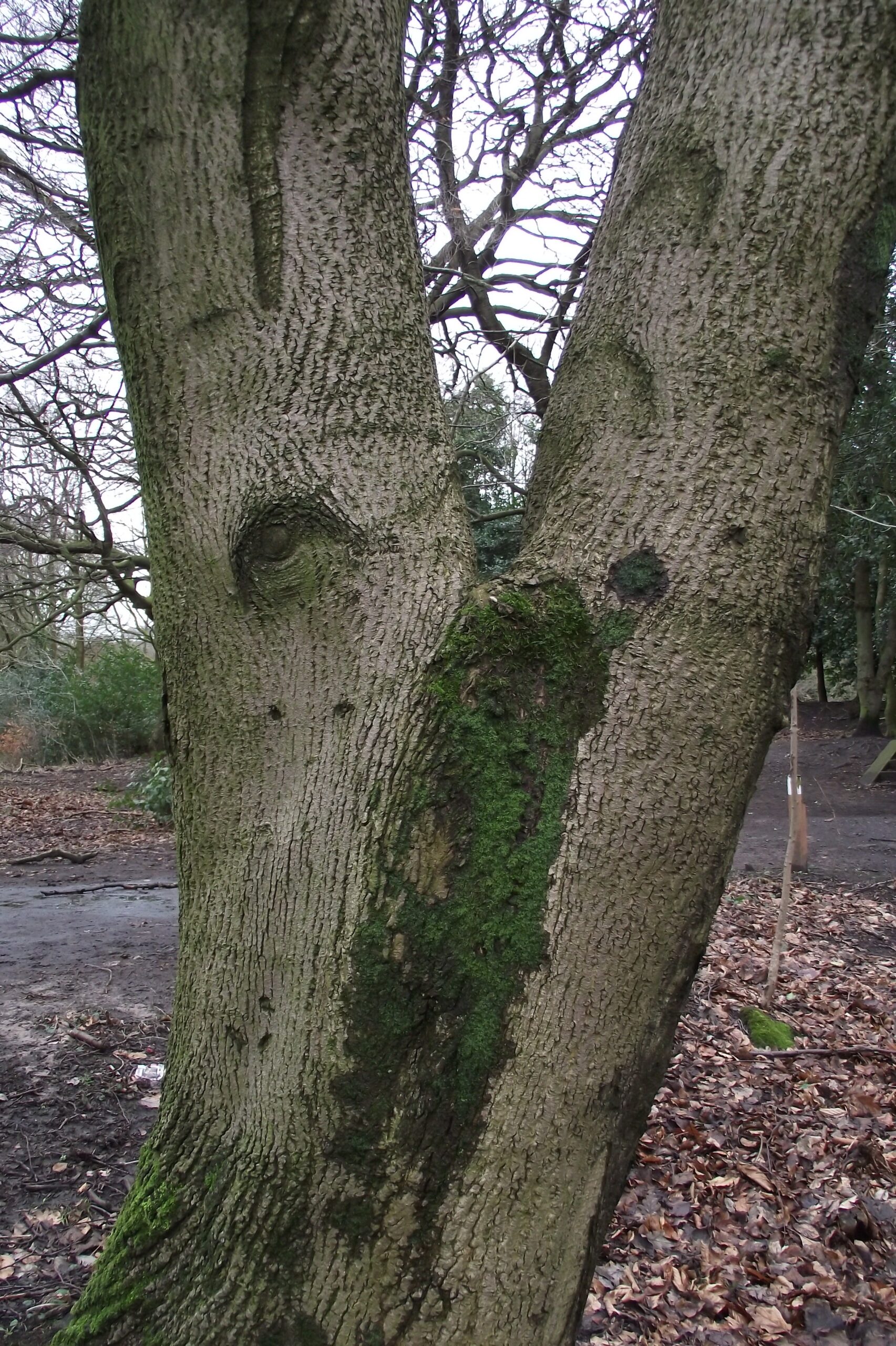
Codominant stems occur when a tree develops two or more main trunks of similar size from the same point instead of a single leader. This is a common structural defect and a leading cause of unexpected tree failure.
Why They’re a Problem
-
Included bark weakens the attachment between stems
-
Poor structure increases the chance of splitting
-
Failure risk grows as the tree gets larger and heavier
Warning Signs
-
Two upright trunks of similar size
-
V-shaped unions or visible seams or cracks
-
Past splitting higher in the canopy
Why It Matters
When codominant stems fail, they often split down the trunk without warning, risking property damage, injury, or total tree loss. Once mature, the defect can’t be fixed—only managed.
Management Options
-
Early structural pruning
-
Weight reduction to limit movement
-
Cabling or bracing to help tie stems together and reduce stress at weak unions
-
Selective removal when appropriate
-
Ongoing monitoring and risk assessment
Codominant stems don’t always require immediate removal, but they should never be ignored. A professional assessment can determine whether pruning, cabling, or removal is the safest solution.